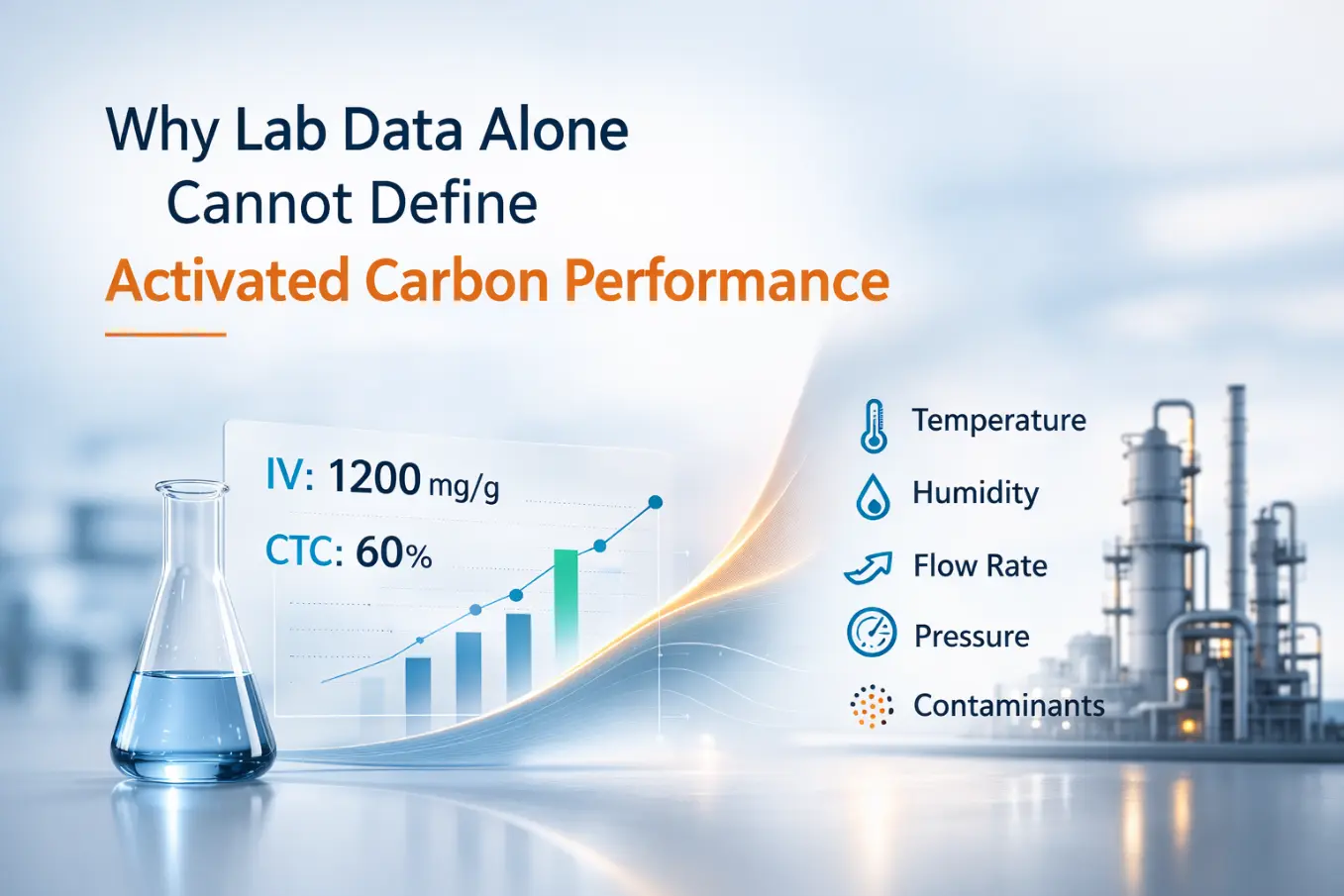
Activated carbon is often evaluated using laboratory indicators such as iodine value, CTC, BET surface area, methylene blue number, or caramel decolorization value. While these metrics are essential for quality benchmarking, they do not fully determine real-world performance in industrial systems.
In practice, activated carbon performance is shaped not only by intrinsic material properties but also by system design, operating conditions, and application-specific priorities. Understanding this distinction is critical for engineers and decision-makers.
Laboratory Indicators: Necessary but Not Sufficient
Laboratory data provides standardized, controlled comparisons between products. Indicators such as:
- Iodine Value – reflects micropore capacity
- CTC Activity – represents gas-phase adsorption potential
- BET Surface Area – measures total surface area
- Methylene Blue Value – indicates mesopore development
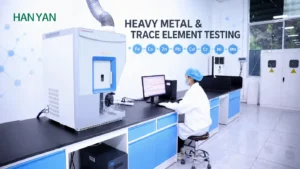
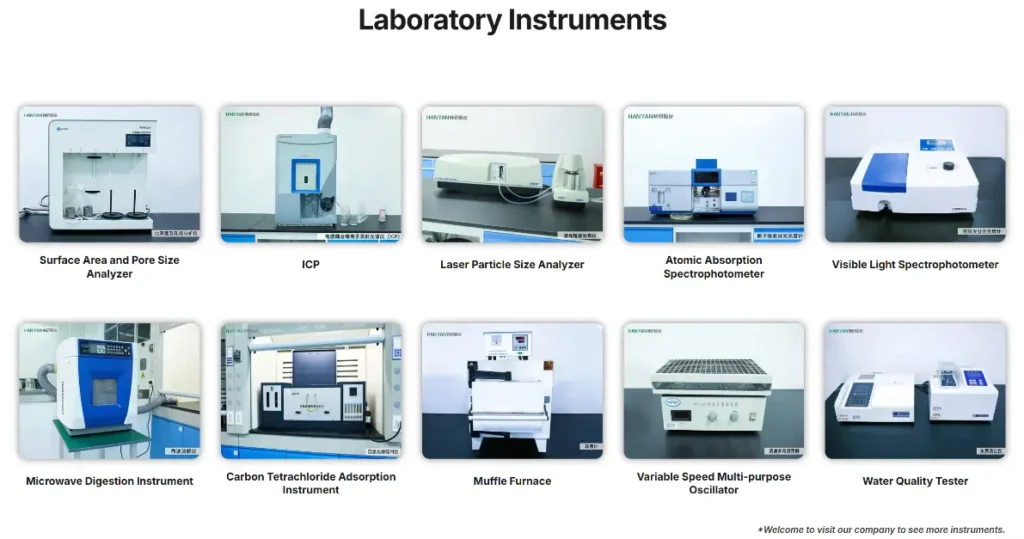
These parameters help classify activated carbon grades. However, they are measured under idealized laboratory conditions that rarely replicate actual industrial environments. HANYAN possesses professional laboratories capable of providing testing for various parameter indicators.
System Conditions Change Everything
Once activated carbon is installed in a real system, performance becomes influenced by multiple dynamic factors:
- Temperature variations
- Humidity levels
- Gas or liquid flow rate
- Pressure drop constraints
- Contaminant concentration and composition
- Contact time
Even a high iodine value cannot compensate for insufficient contact time. Similarly, excellent CTC performance in a lab test may not translate into optimal VOC removal under high-humidity conditions.
Flow Dynamics and Mass Transfer Limitations
In industrial systems, adsorption efficiency is governed by mass transfer dynamics. External diffusion, internal pore diffusion, and boundary layer resistance all affect how quickly contaminants reach active sites.
Carbon with high theoretical adsorption capacity may underperform if pore accessibility does not match contaminant molecular size or if airflow distribution is uneven across a honeycomb structure or packed bed.
Application Defines Performance Priority
Different applications require different performance priorities:
- Gold recovery focuses on adsorption-desorption balance and mechanical strength
- VOC treatment emphasizes dynamic adsorption rate and stability
- Sugar decolorization relies heavily on mesopore structure
- Pharmaceutical filtration demands purity and low extractables
There is no universal “best” activated carbon – only material optimized for a defined process condition.
Engineering-Based Selection Over Single Indicators
Effective carbon selection requires system-level thinking. Instead of focusing on a single laboratory parameter, engineers should evaluate:
- Operating environment
- Target contaminant characteristics
- Equipment configuration
- Lifecycle cost considerations
- Regeneration feasibility
Activated carbon performance is not a static number – it is the result of interaction between material science and engineering design.
Conclusion
Laboratory data remains an essential foundation for product comparison and quality control. However, real industrial performance is ultimately defined by system integration and operational variables.
Understanding this distinction allows companies to move beyond surface-level metrics and toward application-driven carbon optimization – where performance is measured not only by numbers, but by outcomes.
Article Keywords: Activated Carbon Performance, Iodine Value vs Real Performance, CTC Activity Explained, Industrial Activated Carbon Selection, Activated Carbon Engineering, Mass Transfer in Adsorption, VOC Removal Carbon, Gold Recovery Activated Carbon, Carbon-Based Materials, System-Level Carbon Optimization