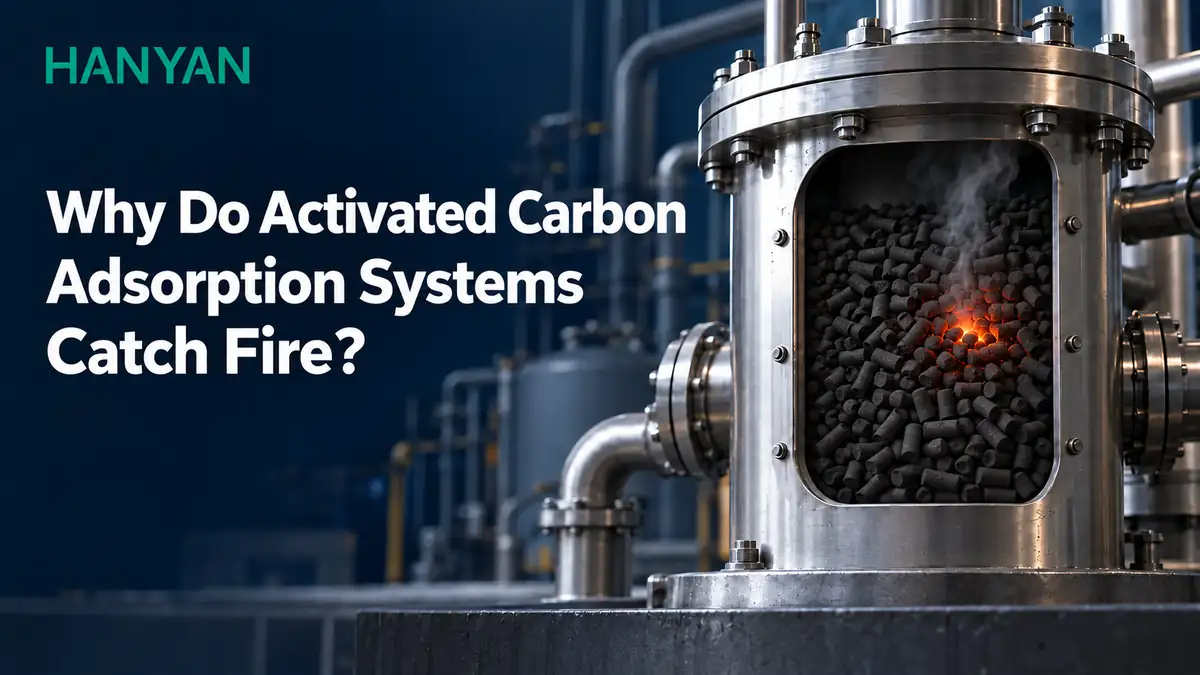
When an activated carbon adsorption system catches fire, one of the first questions is whether the carbon was defective. Another common question follows: if activated carbon is manufactured at high temperatures, why can it catch fire during use?
A fire alone does not establish a carbon quality problem. Investigating an activated carbon fire requires looking at the material, the substances being treated, and the way the system was designed and operated. This article focuses on gas-phase adsorption systems used for VOC and odor treatment.
Contents
- Why high-temperature activation does not make carbon fireproof
- What causes an activated carbon fire?
- Why operating conditions matter
- Does a fire indicate poor carbon quality?
- What should an investigation review?
- What to discuss before selecting activated carbon
1. Why High-Temperature Activation Does Not Make Carbon Fireproof
High-temperature activation develops the pore structure that makes activated carbon useful for adsorption. However, a furnace has a controlled atmosphere. For example, industrial steam reactivation uses an oxygen-depleted furnace environment, as described in Calgon Carbon’s explanation of thermal reactivation. These conditions differ from an adsorber handling oxygen-containing process air.
Manufacturing temperature therefore cannot be used as a safe operating temperature. Likewise, a laboratory ignition temperature is not a universal safety limit.
ASTM D3466-06(2023) describes a reference ignition test for granular activated carbon in flowing air. Its published scope explains that the result cannot predict ignition under a particular application unless the operating conditions are essentially the same. Relevant variables include airflow, bed depth, moisture, heating rate, and contaminants.
2. What Causes an Activated Carbon Fire?
Adsorption can release heat. Additional heat may come from reactions involving substances on the carbon surface. If heat accumulates faster than it leaves the bed, a local hot spot can develop.
The OSHA bulletin on carbon adsorption system fires identifies high concentrations of organic vapors and certain chemical classes, including ketones, aldehydes, organic sulfur compounds, and some organic acids, as conditions requiring attention to heat release.
This does not mean every stream containing one of these substances will ignite. It means chemical compatibility and thermal behavior need evaluation for the actual application. OSHA also notes that heat may ignite flammable vapor when sufficient oxygen is present. Consequently, a fire inside an adsorber does not prove that the carbon itself was the first material to ignite.
3. Why Operating Conditions Matter
A useful way to examine the problem is to separate three questions: where did the heat come from, could it escape, and what supported combustion?
External heating and adsorption-generated heat both matter. ASTM specifically recognizes the possibility of ignition when heating is sudden or heat cannot adequately leave a carbon bed. This is why an inlet temperature reading alone cannot establish the thermal condition throughout the bed.
Shutdown conditions also deserve attention. For the specific impregnated carbon described in its ST I X technical bulletin, Calgon Carbon warns that low convective airflow through carbon exposed to air can permit self-heating and ignition in some circumstances. This product-specific warning illustrates why shutdown and storage instructions must match the grade being used.
4. Does a Fire Indicate Poor Carbon Quality?
Product conformity, application suitability, and system operation are separate questions. An investigation should address all three.
A carbon may meet its agreed purchasing specification yet require a different application assessment. Conversely, compliance with a few adsorption specifications does not establish every aspect of its thermal behavior.
Material formulation can matter. The ST I X bulletin states that the impregnants in that particular product lower its ignition temperature. This should not be generalized to every impregnated carbon, but it demonstrates why different grades cannot be assigned one universal ignition temperature.
For a suspected material issue, preserve batch identification, certificates, retained samples, and the applicable safety data sheet. Compare evidence with the agreed specification before drawing conclusions about quality.
5. What Should an Investigation Review?
The following questions provide a starting point for a qualified technical investigation. They are not a diagnosis of any particular incident.
| Area | Questions to investigate |
|---|---|
| Carbon identification | Was the intended grade installed? Was it virgin, reactivated, or impregnated? Are batch records and retained samples available? |
| Process stream | Were all components disclosed? Did solvent composition, concentration, or production schedules change? |
| Heat sources | What do temperature records show? Could upstream hot gases, hot particles, or maintenance work have introduced heat? |
| Bed and airflow | Did the installed bed and airflow match the design? Were there changes in pressure drop or flow distribution? |
| Operating sequence | What happened during startup, normal operation, shutdown, and any regeneration cycle? |
| Protection systems | Were sensors, alarms, interlocks, and the specified fire protection systems functional and maintained? |
Replacing the carbon without identifying the initiating conditions may leave the underlying problem unresolved.
6. What to Discuss Before Selecting Activated Carbon
To support a useful selection discussion, provide the carbon supplier and system designer with:
- The full gas composition, including minor or intermittent components.
- Normal and peak concentrations, with the basis and units clearly stated.
- Inlet temperature, humidity, airflow, and expected variations.
- Bed dimensions, operating hours, and startup and shutdown arrangements.
- Any regeneration process and previous overheating history.
OSHA recommends evaluating vapor interactions and, where reactions are uncertain, testing potential heat release before service. Changing a carbon grade or process stream should therefore trigger a review with the responsible system engineer.
If overheating or a fire is suspected, follow the site’s emergency plan and involve trained responders. Opening a hot vessel or changing airflow without an engineered procedure can alter oxygen availability; this article is not an emergency operating procedure.
Discuss your application with HANYAN. Share your gas composition, operating conditions, and current carbon specification so we can discuss suitable product options. System fire protection and operating limits should be established by the responsible engineering team using the selected product’s safety information.
References
- OSHA — Fire Hazard From Carbon Adsorption Deodorizing Systems.
- ASTM D3466-06(2023) — Standard Test Method for Ignition Temperature of Granular Activated Carbon. Public scope and significance statements; the full standard is sold separately.
- Calgon Carbon — Activated Carbon. Manufacturing and thermal reactivation overview.
- Calgon Carbon — ST I X Product Bulletin. Product-specific information on impregnation and self-heating.